Case Study · Mental Health
Cerebloom
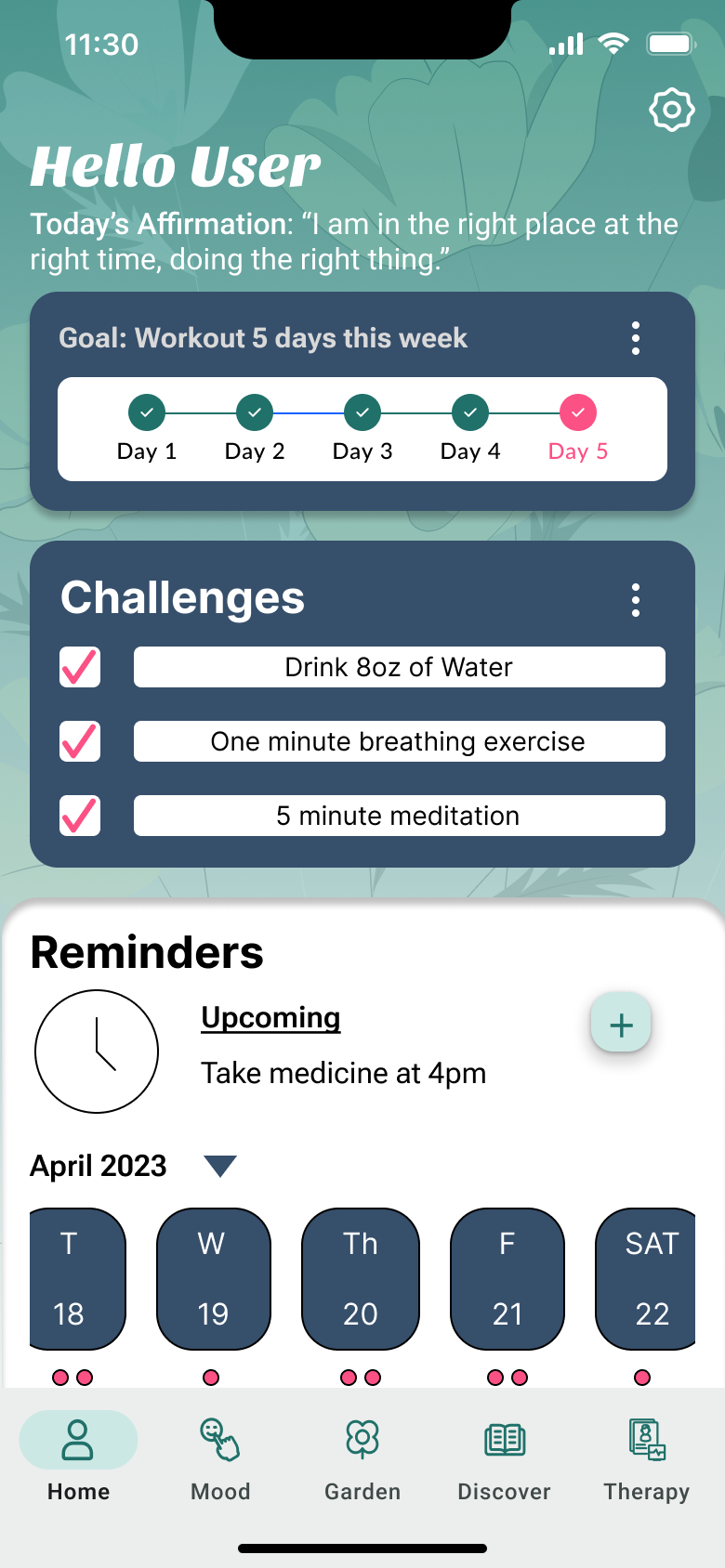
A responsive mental health app designed to lower the barrier to daily wellness habits, taken from first pen-and-paper sketches to a polished, high-fidelity interactive prototype.
Designing calm into a crowded category.
Mental health apps face a paradox: the people who need them most are often the least equipped, emotionally and cognitively, to navigate a busy, gamified, notification-heavy interface. Cerebloom was my exploration of the opposite approach: an experience that feels like exhaling.
I owned the process end-to-end, from initial concept sketches on paper, through wireframes and iterations in Figma, to a fully interactive high-fidelity prototype. The result is a responsive app built around gentle habit formation, soft visual language, and interfaces that never rush the user.
Research-driven, tested, iterated.
Read the Complete Case Study
The whole journey: user research, personas, card sorting, wireframes, usability testing, accessibility decisions, and final designs.
The best way to judge a prototype is to use it.
Explore the full interactive Cerebloom prototype in Figma: every screen, every flow, exactly as a user would experience it.
Launch the Prototype